The Four Aims of Human Life — Reinterpreted by Achalayoga Siddhānta

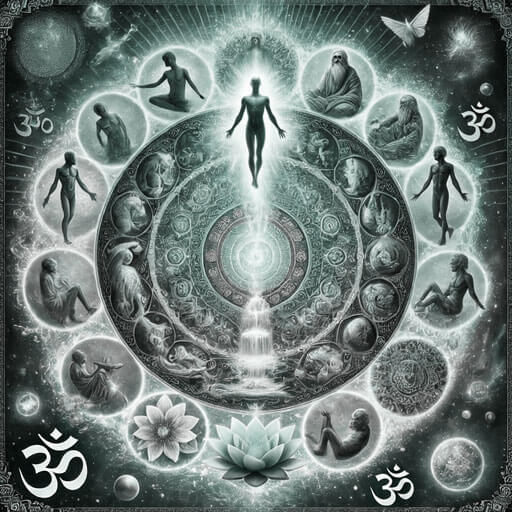
𑁍 Dharma – Living in harmony with truth𑁍 Artha – Pursuing rightful prosperity
𑁍 Kāma – Honoring joy and fulfillment in balance
𑁍 Mokṣa – Freedom from illusion and return to the Real

Achalayoga Siddhānta

The Timeless Path to Recognize the Absolute
— Uncut, Unborn, and Unmovable (Bhagavad Gita 2.23-24, 15.6).

Achalayoga, also known as Achala Paripūrṇa Rājayoga Siddhānta, is a rare and luminous yogic tradition centered on the direct recognition of the Absolute Reality — that which is never born, never changing, and never entangled in motion or form. It is not a system of belief, but a transmission of clarity through Guru Bodha — a seeing that unknots illusion without effort, ritual, or doctrine.

Rooted in the eternal wisdom that shines beyond time, Achalayoga is as ancient as the Vedas and Upaniṣads. Yet it transcends them — not by rejecting scripture, but by revealing the source they point to but cannot capture. It encapsulates the silent core of all Indian śāstra, while gently guiding the seeker beyond all dependence on text, technique, or theology.

This timeless Siddhānta continues to shine through the Guru Paramparā — the living lineage of awakened Achala Gurus who do not create blind followers, but dissolve the illusion of the follower altogether.

A Lineage of Deep Realization

Achalayoga, also referred to as the Achala Sampradāya, has been preserved and expressed through the radiant wisdom of realized masters, particularly in the Telugu and Marathi-speaking regions of India:

Though their languages and forms differed, these masters shared one truth:

Not to refine the illusion — but to quietly help the illusion unwind itself.

Achalayoga Today

In an age of information and spiritual complexity, Achalayoga offers something rare — not more techniques, but the gentle dissolution of the one who needs technique. It does not reject devotion, practice, or scripture — but shows where they end.

To walk Achalayoga is not to strive — it is to see.
And in that seeing, the boundary between seeker and truth quietly fades.

The Absolute is not found — it is simply no longer avoided.

In Sanātana Dharma, human life is guided by four foundational aims known as the puruṣārthas — the pillars that harmonize worldly responsibilities with spiritual evolution:

Achalayoga Siddhānta Perspective

In Achalayoga Siddhānta, even these four aims are understood in a deeper light:

Thus, while the puruṣārthas offer balance to human life, Achalayoga ultimately invites the seeker to see:

Even the aim to attain mokṣa belongs to the seeker-knot.
True freedom begins not in pursuit — but in the stillness that never moved.

Dharma (धर्म)

Righteous Living / Duty

Dharma is the principle of living in alignment with truth, justice, and ethical responsibility. It includes one’s personal, social, and cosmic duties — not as rules, but as expressions of harmony. It provides the moral foundation upon which all other aims rest.

Artha (अर्थ)

Material Prosperity / Security

Artha refers to the pursuit of wealth, stability, and resources necessary to support life and fulfill one’s responsibilities. It is not about greed, but about rightful acquisition and sustenance, guided by dharma.

Kāma (काम)

Desire/ Pleasure/ Emotional Fulfillment

Kāma encompasses the experience of beauty, love, joy, and aesthetic enjoyment — including art, relationships, and sensory pleasures — when pursued within the boundaries of dharma. It reflects the fullness of human life, not its denial.

Mokṣa (मोक्ष)

Liberation / Freedom from Illusion

In common systems, mokṣa is spoken of as the highest aim of life — freedom from bondage, ego, and the cycle of birth and death (saṁsāra). But in Achalayoga Siddhānta, mokṣa is not an aim, not a goal, and not the recognition of a hidden self. It is the cutting of the jīva-granthi — the knot of identity, doership, and knowing.

When this knot dissolves, the illusion of bondage vanishes. What remains is not attainment, recognition, or fulfillment, but the unrelated fullness of Achala Paripūrṇa Brahman — unmoved, unborn, imperishable, beyond all cycles.

Beyond the Journey

Into What Never Moved


Reincarnation:
The Illusion of Birth and the Knot of Identity

In many spiritual traditions, reincarnation (janma–punarjanma) is seen as the soul’s ongoing cycle of birth, death, and rebirth — driven by karma and sustained by desire, ignorance, and attachment. But in Achalayoga Siddhānta, this entire framework is re-examined at its root.
Achalayoga does not deny the appearance of birth or the unfolding of experience. Instead, it shows that:
There is no individual soul migrating across lives.
There is only the repetition of karmic tendencies within prakṛti — reflected as the illusion of a doer.
What is called reincarnation is not the journey of a jīva — it is the reappearance of the granthi (the identity-knot), replaying itself through memory, form, and sensation. The body, mind, and circumstances are not a soul’s vehicle — they are prakṛti’s guṇic configurations, temporarily assembled as a pattern.


Read More

The Path to Liberation from the Cycle of Birth, Death, and Time

In many systems, mokṣa (liberation) is described as a gradual process — one that involves the removal of ignorance (avidyā), desires, and attachments that sustain saṁsāra, the apparent cycle of birth and death.
However, in Achalayoga Siddhānta, mokṣa is not the result of progress — but the collapse of the one who imagines bondage. It is not the end of a journey — but the realization that there was no traveler to begin with.


Read More

Realization: The Path to Absolute Wisdom

Achalayoga Siddhānta offers a rare and unshakable clarity — not by constructing systems, but by gently dissolving confusion about the real and the unreal. It helps the sincere seeker distinguish between the Achala Paripūrṇa Brahman — the Absolute that is uncaused, unmoved, and unrelated — and the Brahman experienced within the space-time continuum, which still belongs to prakṛti.
This wisdom does not unite the individual soul (jīva) with a higher soul — rather, it reveals that the jīva was never separate to begin with. The illusion of ego (ahaṅkāra) is not overcome through fusion or absorption, but through bodha — the silent, non-relational seeing that unties the knot of identity.
By walking the Path of the Guru, seekers are not asked to believe — they are invited to see clearly. Achalayoga does not promote blind faith or conceptual knowledge. It offers the gentle dissolution of the one who asks, strives, and struggles — leaving only Achala, the untouched and ever-complete.


Read More

Reincarnation:
The Illusion of Birth and the Knot of Identity

In many spiritual traditions, reincarnation (janma–punarjanma) is seen as the soul’s ongoing cycle of birth, death, and rebirth — driven by karma and sustained by desire, ignorance, and attachment. But in Achalayoga Siddhānta, this entire framework is re-examined at its root.
Achalayoga does not deny the appearance of birth or the unfolding of experience. Instead, it shows that:
There is no individual soul migrating across lives.
There is only the repetition of karmic tendencies within prakṛti — reflected as the illusion of a doer.
What is called reincarnation is not the journey of a jīva — it is the reappearance of the granthi (the identity-knot), replaying itself through memory, form, and sensation. The body, mind, and circumstances are not a soul’s vehicle — they are prakṛti’s guṇic configurations, temporarily assembled as a pattern.


Read More

The Path to Liberation from the Cycle of Birth, Death, and Time

In many systems, mokṣa (liberation) is described as a gradual process — one that involves the removal of ignorance (avidyā), desires, and attachments that sustain saṁsāra, the apparent cycle of birth and death.
However, in Achalayoga Siddhānta, mokṣa is not the result of progress — but the collapse of the one who imagines bondage. It is not the end of a journey — but the realization that there was no traveler to begin with.


Read More

Realization: The Path to Absolute Wisdom

Achalayoga Siddhānta offers a rare and unshakable clarity — not by constructing systems, but by gently dissolving confusion about the real and the unreal. It helps the sincere seeker distinguish between the Achala Paripūrṇa Brahman — the Absolute that is uncaused, unmoved, and unrelated — and the Brahman experienced within the space-time continuum, which still belongs to prakṛti.
This wisdom does not unite the individual soul (jīva) with a higher soul — rather, it reveals that the jīva was never separate to begin with. The illusion of ego (ahaṅkāra) is not overcome through fusion or absorption, but through bodha — the silent, non-relational seeing that unties the knot of identity.
By walking the Path of the Guru, seekers are not asked to believe — they are invited to see clearly. Achalayoga does not promote blind faith or conceptual knowledge. It offers the gentle dissolution of the one who asks, strives, and struggles — leaving only Achala, the untouched and ever-complete.


Read More

YOGA
Teaching Methodology

Hatha Yoga

Hatha Yoga

Hatha Yoga is an ancient system rooted in Sanātana Dharma that purifies the body and breath — but in Achalayoga, it is understood as preparation, not the final path.


Taraka Yoga

Taraka Yoga

Tāraka Yoga is a traditional practice rooted in the observation of celestial forces and their impact on human life — though in Achalayoga, such cosmic alignments are understood as karmic patterns within prakṛti, not determinants of ultimate truth.


Sankhya Yoga

Sankhya Yoga

Sāṅkhya Yoga combines philosophical analysis with yogic discipline to distinguish puruṣa (spirit) from prakṛti (nature); however, Achalayoga views this as a provisional step, revealing that even the seer–seen divide is part of the final illusion.


Amanaskayoga

Amanaskayoga

Amanaska Yoga focuses on stilling the mind to access a state beyond thought, often associated with Brahman; yet, Achalayoga reveals that even pure awareness is a subtle formation within prakṛti — and the Absolute remains untouched by all mental or meditative states.


Mahavakyas

Mahavakyas

Mahāvākyas are profound statements from the Upaniṣads, often seen as expressing the core wisdom of Sanātana Dharma — though Achalayoga Siddhānta reveals that even their highest declarations, like “I am Brahman,” preserve a subtle identity, and the Absolute lies beyond all assertion.


Vartika

Vartika

Vārtika refers to detailed commentaries that expand and clarify the meaning of sacred texts. In traditions like Advaita Vedānta, vārtikas provide interpretive analysis of core scriptures. However, in Achalayoga Siddhānta, true clarity arises not from interpretation but from the severance of the interpreter — where even the most refined commentary is seen as a reflection within prakṛti, not a bridge to the Absolute.

Sale
Achalayoga

Achalayoga

Achalayoga is not a holistic blend of the Veda, Vedānta, and Yoga, but a radical culmination beyond them — honoring their contributions while dissolving the seeker, the knower, and the doer that each path preserves.


View All Yoga Courses

Spiritual Courses

A Path to Clarity and Freedom


Meditation

The End of the Meditator
Most spiritual paths begin with meditation — Achalayoga begins where meditation ends.
We do not teach you how to focus, breathe, or still the mind.
We invite you to see: the one trying to meditate is the knot.
Silence is not a state to reach. Awareness is not the Absolute.
Meditation may happen — but when the meditator vanishes, bodha begins.
“Let meditation burn. Let the seeker of stillness dissolve.
What remains is not peace — but That which never moved.”


Beyond Healing

Many traditions aim to balance energy, align chakras, or awaken inner power.
But Achalayoga Siddhānta does not promise healing through energetic manipulation.
Instead, it reveals a deeper truth:
The very one who seeks to be healed is part of the illusion.
Energy belongs to prakṛti — it may move, refine, or settle,
but it can never reach That which was never bound.
True bodha does not begin by harnessing energy —
it begins when the owner of energy disappears.
We do not restore the seeker.
We expose that there was no seeker to begin with.


Mindfulness

The Illusion of the Watcher
Modern teachings glorify mindfulness as presence, attention, and calm.
But in Achalayoga Siddhānta, even the one who watches the mind is part of the illusion.
Mindfulness keeps the observer alive.
Bodha begins only when the observer collapses.
We do not train the mind.
We reveal that the mind and its manager are both movements of prakṛti.


Chakras

Centers of Energy — Not Centers of Truth
Traditional systems speak of chakras as energy centers to be awakened or aligned.
But in Achalayoga Siddhānta, all such movements belong to prakṛti — not the Absolute.
Chakras may open, spin, or glow —
but the one who awakens them is still within the illusion.
We do not rise through chakras.
We dissolve the climber.


View All Spiritual Courses

Testimonials

Journeys Touched by Achala Wisdom

Sādhvī Kamala Devī

Nāma-Saṅkīrtana Practitioner (Rādhā-Rāmānī Mandali)

The Guru Did Not Carry Me — He Dissolved Me

“I lived in temples. I sang kīrtan. I wept for Kṛṣṇa. I called my Guru the boatman across the ocean of saṁsāra. But somewhere inside, there was always a lingering fear — that the one who weeps, the one who calls, the one who ‘loves God’ was not yet gone. Achalayoga did not ask me to stop loving. It showed me that even love is bondage if the lover survives. The Guru here is not the compassionate savior — He is the one in whom all seeking dissolves. This teaching broke my heart — and only after the heart was gone, was there nothing left to protect. And that was freedom — not from the world, but from myself.”

Daniel Rivers

Nonduality Teacher (California, USA)

Beyond Awareness, Beyond Self — The Final Cut

“I’ve spent two decades exploring Advaita, neo-nonduality, and Dzogchen. I’ve spoken of the witness, of presence, of Being. But Achalayoga Siddhānta floored me. It does not refine the observer — it burns the observer. It doesn’t settle in silence — it exposes silence as another mask. It doesn’t rest in the now — it questions the one who locates time. Achalayoga is the first tradition I’ve seen that doesn’t just transcend illusion, but collapses the field in which illusion and transcendence both appear. It is fierce, brilliant, and utterly unmarketable — which is exactly why it is Real.”

Prof. Arundhati Mehta

Comparative Philosophy & Consciousness Studies

A Metaphysical Break No Other System Dares to Make

“I’ve studied Vedānta, Buddhism, Sufism, and even postmodern deconstruction — but never encountered anything as uncompromising, surgically precise, and metaphysically final as Achalayoga Siddhānta. It does not offer refinement. It exposes the illusion behind the one who refines. It does not teach truth. It severs the very field in which truth and falsehood arise. This isn’t philosophy — it’s fire. I tell my students: if you dare to face the end of knowing, this is the only system that doesn’t leave you with a center.”

Dr. Vivek Iyengar

Theoretical Physicist, Quantum Information Researcher

Where Physics Ends, Achalayoga Begins

“As a physicist, I deal with measurements, systems, and models — including time, space, matter, and even consciousness. But Achalayoga goes further than any scientific reduction or cosmological theory. It doesn’t argue against models — it exposes the one who models as the illusion. Time here is not linear or cyclical — it is declared non-existent. Awareness is not fundamental — it is burnt as the final residue of prakṛti. The idea that there’s nothing ‘beyond’ Achalayoga is inaccurate. There isn’t even an ‘Achalayoga’ to go beyond. This is not a conclusion — it is collapse.”

Smt. Lalita Anand

Former Kriyā Yogi & Devotee

Not the Path I Wanted — But the Fire I Needed

“For years I followed gurus, mantras, meditations. I touched peace, glimpsed silence, felt bliss — but something remained. A thin veil. A subtle self still witnessing it all. Achalayoga shattered that veil. It didn’t show me ‘who I am’ — it exposed that there is no one. This is not a path of healing, growth, or experience. It is not gentle. It is sacred destruction. The Guru here doesn’t guide you — He ends you. And yet, for the first time, there’s nothing left to search. Just the clarity that I was never real to begin with.”

Vidwan Dr. M. Subrahmanya Sharma

Telugu Sahitya & Darśana Pandit

వేమన తరువాత ఇదే మిగిలింది

“తెలుగు భాషలో వేమనకవిగా ఆత్మ విజ్ఞానపు విరోధులపై ప్రతాపంగా గళమెత్తిన వ్యక్తి తరువాత — ఇంతటి బోధను నేను చూడలేదు. ఆచలయోగ సిద్ధాంతం వేదాంతాన్ని మించిన సిద్ధంతం. అది శబ్దాన్ని కూడా దహిస్తుంది. ఇది కవిత్వం కాదు — ఇది వక్ర శూన్య మౌనం కాదు — ఇది హృదయగ్రంథిని కాల్చివేసే తపోగ్ని. ‘నేను’ అనే భావం ఒక భ్రాంతిస్వరూపం. అటువంటి దానిని కవితలతో కాదు — విరోధంతో కాదు — సంపూర్ణంగా దహించివేసే బోధతో మాత్రమే పూర్తిగా అంతం చేయగలుగుతారు. ఆచలయోగంలో ఇది ఉంది. ఇది శుద్ధ వేదాంతాన్ని మించిన బోధ. ఇది అసలైన తెలుగు తత్త్వాన్ని పునరుజ్జీవింపజేస్తుంది.”

Not to become more, but to see that the one becoming was never real

This is not a path to transformation, but the undoing of the seeker.

Join us

Meditation
❀ Energy Healing
❀ Mindfulness
❀ Chakras
❀ Holistic Healing therapy
❀ Life Coaching