

A Path to Clarity and FreedomOur courses are designed to bring steadiness, devotion, and discipline to everyday life. They help seekers calm the mind, live with balance, and approach spiritual inquiry with sincerity. In the vision of Achalayoga Siddhānta, these supports are not the final goal but the preparation. True freedom comes not through endless transformation, but through the Guru’s final guidance — the release from illusion and the quiet clarity of the Achala Paripūrṇa Brahman.

Discover Clarity, Discipline & the End of Bondage
Unlock the teachings of Achalayoga Siddhānta — not for self-awakening or growth, but for a clarity that cuts through illusion. Our courses bring together disciplines of devotion, meditation, and study to steady the body–mind and prepare the seeker. These supports may bring mental clarity, emotional balance, and well-being, but their deeper purpose is preparation for the Guru’s final teaching — the severance of the knot of “I.”
True freedom is not self-realization or inner transformation, but the end of the seeker itself, revealing the unrelated fullness of Achala Paripūrṇa Brahman.
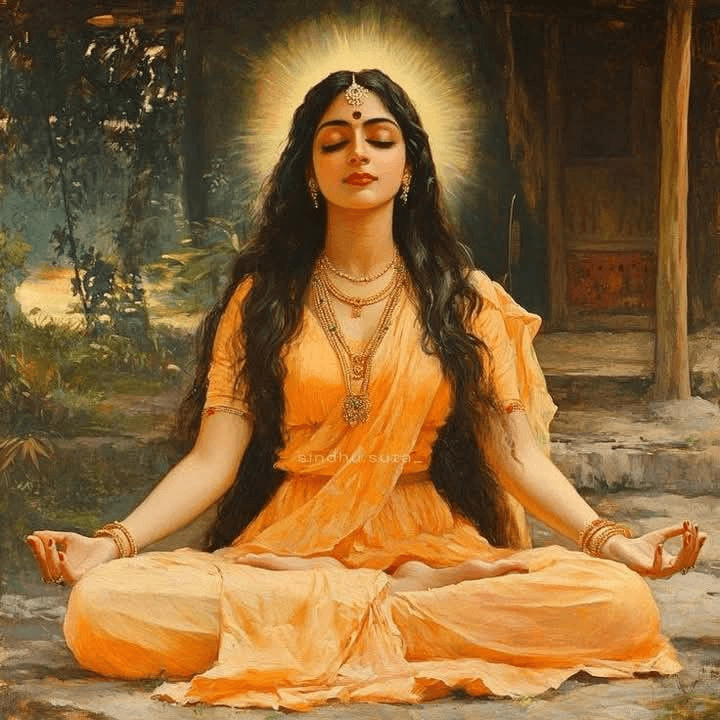
Meditation
Meditation in Achalayoga Siddhānta is a discipline to quiet the restless mind and steady the body–mind complex. It may bring temporary clarity, focus, or calmness, but these are preparatory states within consciousness (yeruka). Meditation does not connect one to the Absolute, nor does it reveal liberation. Its true role is to prepare the seeker — reducing distraction and softening attachment — so that the Guru’s final teaching can cut the granthi (the knot of “I”).
Energy Healing
In Achalayoga Siddhānta, practices such as Reiki, Pranic Healing, or other energy-based methods are recognized as working within prakṛti — the realm of body, mind, and subtle energies. They may help restore balance, ease stress, and support physical or emotional well-being. Yet these remain functional benefits, not liberation.
True freedom does not come from aligning or balancing energy fields, but from the severance of the granthi (the knot of “I”) through the Guru’s teaching. Energy practices may calm and prepare the seeker, but the Absolute — Achala Paripūrṇa Brahman — is untouched by all energies, subtle or gross.
Mindfulness
Mindfulness practices can help calm the mind, reduce anxiety, and bring steadiness to daily life. They cultivate attentiveness and balance, making worldly living more manageable. In Achalayoga Siddhānta, these benefits are acknowledged as functional, not final.
Awareness, gratitude, and acceptance belong to consciousness (yeruka) — the very field of the knot (granthi). While mindfulness may prepare and discipline the seeker, liberation does not come through cultivating presence or positivity. It comes only through the severance of the knot of “I” by the Guru’s teaching.
The Absolute — Achala Paripūrṇa Brahman — is not awareness, not presence, not joy, but the unrelated fullness beyond all states.
Chakras
The chakra system describes seven subtle energy centers said to influence body, mind, and emotions. Practices such as chakra meditation, balancing, and activation may help harmonize energy flow, support physical well-being, and promote emotional stability.
Achalayoga Siddhānta clarifies: all chakras and energy practices belong to prakṛti (consciousness / yeruka). They are valuable for health and discipline but are not liberation. The seeker may feel balance, inner peace, or expansion of awareness, yet the granthi (the knot of “I”) remains intact.
True freedom is not the awakening or alignment of chakras, but the severance of the knot of identity. The Absolute — Achala Paripūrṇa Brahman — is unrelated to energy, subtle centers, or even consciousness itself.
Holistic Healing Therapy
This program brings together time-honored systems like Ayurveda, Sound Healing, Aromatherapy, and Crystal Healing with modern approaches to wellness. These methods can support balance in body and mind, improve vitality, and ease stress through natural and energetic practices.
Achalayoga Siddhānta clarifies: such therapies are valuable for health and well-being, but they remain within prakṛti (consciousness / yeruka). They can restore balance, but they cannot touch the root of bondage — the granthi (the knot of “I”).
True liberation is not in harmonizing energies or restoring vitality, but in the severance of the knot of identity, revealing the unrelated fullness of Achala Paripūrṇa Brahman. Healing belongs to life; liberation belongs to the end of illusion.
Life Coaching
Our life coaching sessions provide guidance for clarity, steadiness, and balanced living. Seekers learn how to navigate challenges, refine discipline, and cultivate responsibility in everyday life.
Achalayoga Siddhānta clarifies: personal growth, confidence, and goal-setting are functional supports — useful within life, but not liberation. Success, happiness, and fulfillment remain states of consciousness, rising and falling with circumstance.
The deeper purpose of coaching in the light of Achalayoga Siddhānta is to prepare the seeker: to loosen attachments, reduce distraction, and bring the mind into steadiness. This becomes the ground for the Guru’s final teaching — the cutting of the granthi (the knot of “I”), which alone reveals the unrelated fullness of Achala Paripūrṇa Brahman.
Working for Happiness
This program explores how to live responsibly in the world — pursuing work, relationships, and personal goals — while practicing detachment. Detachment helps reduce anxiety, moderate desire, and maintain balance amidst success or failure.
Achalayoga Siddhānta clarifies: happiness, prosperity, and well-being are temporary states in consciousness. Detachment can make worldly life steadier, but it cannot bring liberation. The granthi (the knot of “I”) remains as long as the doer identifies with success and failure.
The deeper purpose of such training is preparation: to loosen worldly entanglements and cultivate steadiness, so the seeker becomes ready to receive the Guru’s final teaching — the severance of the knot. Only then is one free from the illusion of happiness and sorrow alike, resting in the unrelated fullness of Achala Paripūrṇa Brahman.